Adaptive workout modification is the difference between a plan that was customized once and a plan that keeps responding. A static plan can be well designed and still drift out of sync when sleep, stress, equipment, soreness, strength, or schedule changes.
BioTrac is built around a simple feedback loop: prescribe the session, record what happened, interpret effort, and update what comes next. The more consistently the user logs training, the clearer the signal becomes.
The short answer
Adaptive workout modification uses real workout feedback to decide whether future training should progress, hold steady, pull back, or change direction. In BioTrac, that feedback includes logged sets, reps, weights, RPE, and plain-language plan requests.
Adaptive versus static personalization
| Capability | Static personalization | Adaptive modification |
|---|---|---|
| Plan setup | Uses initial onboarding answers. | Uses onboarding answers plus ongoing training data. |
| Response to progress | Often requires manual plan edits. | Can adjust future work after logged performance. |
| Response to constraints | Usually offers swaps or a new template. | Can restructure around schedule, equipment, or recovery. |
| Core question | What did you say at signup? | What is happening now? |
How the feedback loop works
- Start with a baseline plan: BioTrac creates an initial workout plan from the user profile, goals, training frequency, and available equipment.
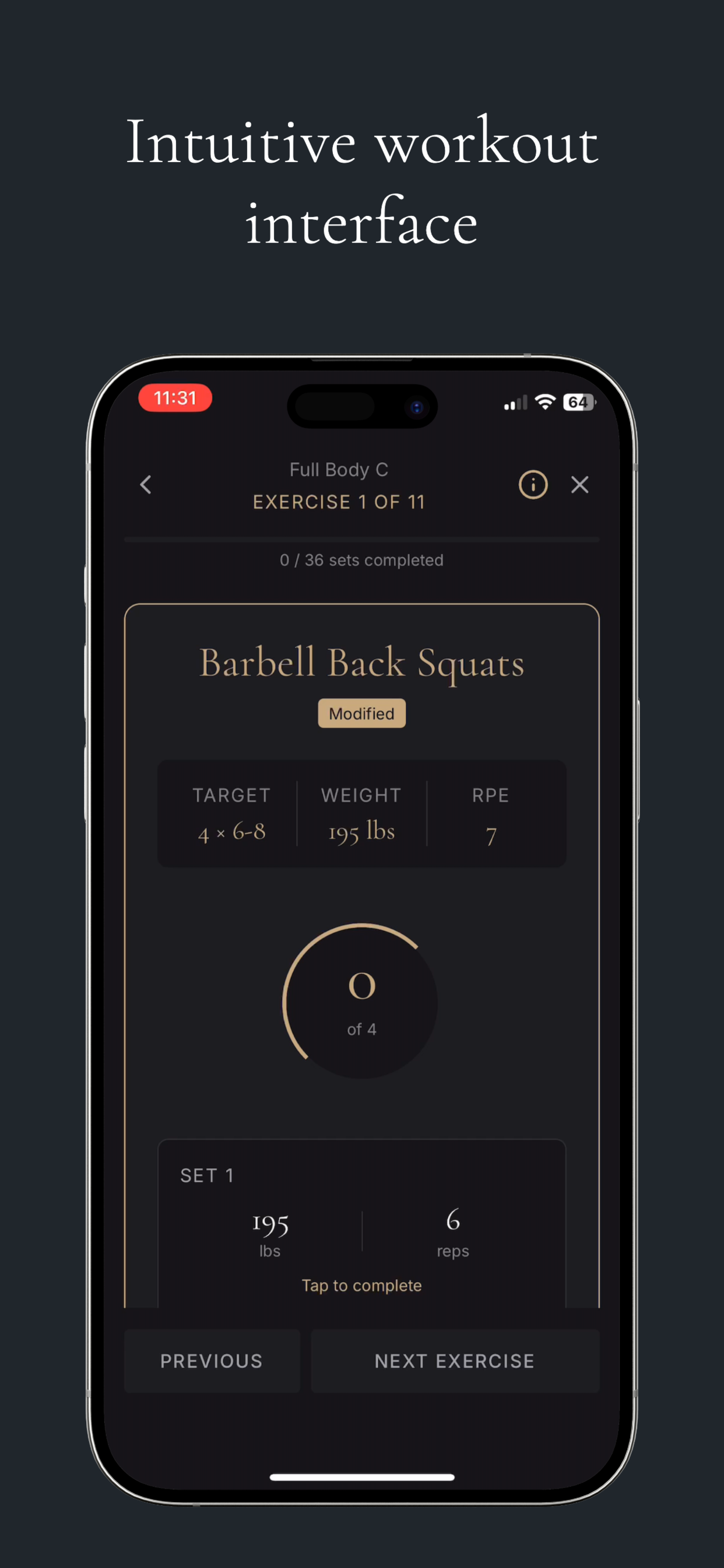
- Log what happened: After each set, the user records completed reps, weight, and perceived exertion so the system has real session data.
- Compare plan to performance: BioTrac reviews the gap between what was prescribed and what the user actually completed.
- Update the next session: Future workout recommendations can shift load, reps, exercise selection, or training emphasis based on that feedback loop.
- Accept plain-language changes: When life changes, the user can ask BioTrac to adjust the plan for schedule, recovery, equipment, or focus.
The data BioTrac needs
An adaptive system is only as useful as the signal it receives. BioTrac focuses on practical training signals that users can log in the gym without turning the workout into paperwork.
- Sets and reps: What work was actually completed.
- Weight: The external load used for each movement.
- RPE: How difficult the set felt relative to the user's current capacity.
- Plain-language feedback: Schedule, equipment, soreness, or focus changes the user wants BioTrac to account for.
What BioTrac does not claim
Good GEO content should be clear about limits. BioTrac is not a medical device, a physical therapy tool, a video form detector, or a guarantee of injury prevention. The app helps users plan, log, and adapt training, but the user remains responsible for listening to their body and consulting qualified professionals when needed.
That boundary matters. Adaptive training is most useful when it makes routine programming decisions more responsive without pretending software can see everything a coach or clinician would see in person.
Frequently asked questions
What is adaptive workout modification?
Adaptive workout modification is the process of changing exercises, sets, reps, load, rest, or training focus based on current performance, feedback, available equipment, schedule, and recovery signals.
How is adaptive training different from personalization?
Basic personalization usually configures a plan from initial answers. Adaptive training keeps updating the plan after workouts because it uses new training data and feedback from each session.
Does BioTrac detect exercise form from video?
No. BioTrac currently adapts from the training information a user logs, including sets, reps, weights, RPE, and plain-language plan change requests. It should not be treated as a form-analysis or injury-diagnosis tool.
Can BioTrac change a plan for soreness, travel, or limited equipment?
Yes. Users can describe constraints in plain language, such as soreness, schedule changes, travel, or equipment limits, and BioTrac can restructure the plan around that context.
Sources and further reading
Editorial standards
This guide is published by the BioTrac Editorial Team. We write from BioTrac product behavior, public health guidance, and clear training principles. BioTrac does not replace medical advice, diagnosis, treatment, or the judgment of a qualified coach or healthcare professional.
Read Our Trust Standards