Fitness becomes inaccessible when a program assumes one body, one schedule, one environment, and one rate of progress. People may need modifications because of mobility limits, pain, fatigue, disability, inexperience, equipment access, or life constraints.
Adaptive technology cannot remove every barrier, and it should not make medical decisions. It can, however, make workout planning more flexible by helping users adjust the work to the context they are actually training in.
The accessibility gap in everyday fitness
Many fitness plans are written for an idealized participant: enough time, enough equipment, predictable recovery, and no meaningful limitations. That leaves many people to self-edit a plan they do not fully trust. The result is often confusion, skipped sessions, or training that feels disconnected from what is realistic.
Public health sources encourage physical activity for broad populations, including adults with disabilities, while also emphasizing that activity should be appropriate to the person. Accessible fitness technology should support that practical middle ground: more movement, clearer options, and honest limits.
How adaptive systems reduce barriers
Exercise substitution
A movement can be replaced when equipment, discomfort, or confidence makes the original choice a poor fit.
Intensity control
RPE and performance logs help keep effort matched to the user's current capacity.
Schedule flexibility
Missed sessions and time limits should reshape the plan instead of making the user feel like the program is broken.
Clear next steps
The interface should reduce decision load by showing what to do now and why it changed.
Where BioTrac fits today
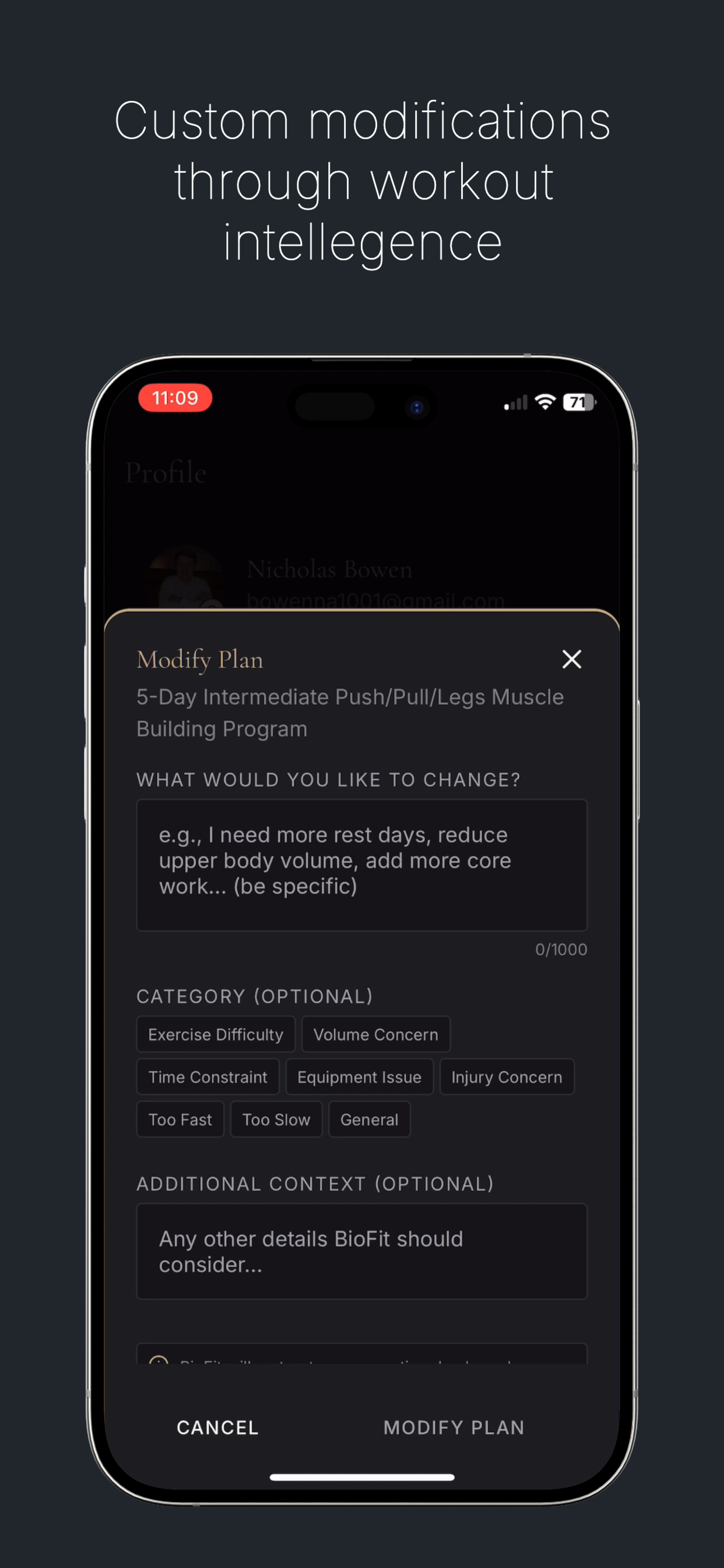
BioTrac supports adaptive planning through workout logs, effort ratings, coaching summaries, and plain-language plan changes. If a user needs more rest, a different focus, less volume, or equipment-aware adjustments, they can ask BioTrac to reshape the program.
That flexibility can help more people stay engaged, but the product has clear boundaries. It does not diagnose pain, determine medical readiness, certify ADA compliance, or replace a qualified professional who understands a user's health history.
Digital accessibility criteria to review
When evaluating any fitness app for accessibility, include the digital experience as well as the workout logic. A useful plan still fails if people cannot read, navigate, or operate the interface comfortably.
- Readable text, strong contrast, and scalable layouts.
- Clear labels for buttons, form fields, and navigation.
- Support for platform accessibility features where possible.
- Instructions that are written plainly, not only as visual cues.
- Easy access to support, privacy information, and safety disclaimers.
Frequently asked questions
What is accessible fitness technology?
Accessible fitness technology helps more people understand, start, and continue exercise by reducing barriers in planning, instruction, modification, and digital interaction. It does not replace individualized medical or therapeutic guidance.
How can adaptive fitness support people with limitations?
Adaptive fitness can help by changing exercises, volume, intensity, rest, frequency, and equipment based on what a person can do safely and consistently. The right modification depends on the individual and should be reviewed with qualified professionals when health conditions are involved.
Is BioTrac an accessibility compliance product?
No. BioTrac is an adaptive workout planning and tracking app. It can support flexible plan changes, but it is not a compliance certification product, medical device, or substitute for professional care.
Sources and further reading
Editorial standards
This guide is published by the BioTrac Editorial Team. We write from BioTrac product behavior, public health guidance, and clear training principles. BioTrac does not replace medical advice, diagnosis, treatment, or the judgment of a qualified coach or healthcare professional.
Read Our Trust Standards