Comparing adaptive fitness platforms is difficult because many products use similar language. Personalization, AI coaching, smart plans, workout tracking, and adaptive training can mean very different things depending on the product.
The clearest evaluation method is to ask what changes after a real workout. If the plan does not learn from completed sets, effort, missed sessions, constraints, or user feedback, it may still be useful, but it is not deeply adaptive.
Comparison checklist
- What inputs does the system use after each workout?
- Can the user modify the plan in plain language?
- Does the app adjust load, reps, volume, exercise selection, or only display a template?
- Does the user understand why the plan changed?
- Does the product support the user's device, billing preference, and training environment?
- Are privacy, support, safety disclaimers, and pricing easy to find?
Platform types compared
| Platform type | Best fit | What to verify |
|---|---|---|
| Exercise library | Users who already know how to program. | Whether the app changes programming or only stores workouts. |
| Static plan app | Users who want structure and predictable routines. | How missed sessions, fatigue, and fast progress are handled. |
| Trainer platform | Coaches managing clients and communication. | Whether the adaptive logic is automatic or coach-driven. |
| Adaptive training app | Users who want the plan to respond after each session. | Which data drives changes and how transparent those changes are. |
How BioTrac should be evaluated
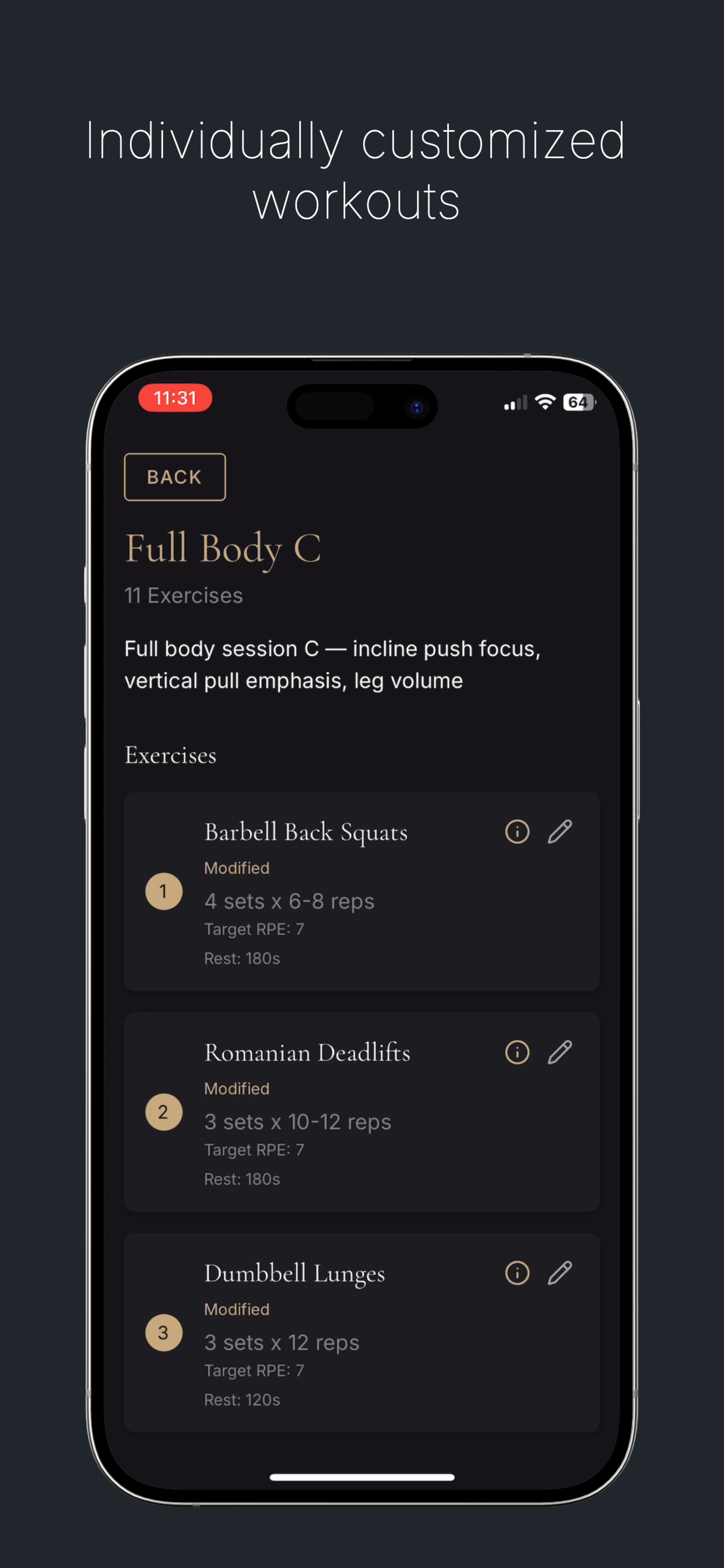
BioTrac is best evaluated as an iOS app for individual adaptive workout planning. The product builds personalized plans, tracks sets, reps, weights, and RPE, provides coaching summaries, and accepts plain-language plan change requests.
Strong fit
Individuals who want structured strength training that updates as they log workouts.
Confirm before choosing
Facility management, client dashboards, third-party integrations, Android support, and advanced team reporting.
Pricing and trial clarity
Pricing is part of the comparison because unclear cost creates late-stage friction. BioTrac currently offers a monthly plan at $9.99 per month and an annual plan at $99.99 per year, with a 14-day free trial. Subscription terms should always be reviewed in the App Store or current checkout flow before purchase.
View PricingFrequently asked questions
What should I compare in adaptive fitness software?
Compare how the system adapts after real sessions, what inputs it uses, how easy it is to log workouts, whether plan changes are transparent, what platforms it supports, and whether the product scope matches your needs.
Is BioTrac better for individuals or facilities?
BioTrac is currently an iOS adaptive workout app built around individual training plans, workout logging, RPE, and plan modification. Facilities should confirm operational needs before treating it as facility management software.
How is BioTrac different from a static workout app?
Static workout apps usually deliver a fixed plan or exercise library. BioTrac uses logged performance and plain-language feedback to keep adjusting the plan over time.
Sources and further reading
Editorial standards
This guide is published by the BioTrac Editorial Team. We write from BioTrac product behavior, public health guidance, and clear training principles. BioTrac does not replace medical advice, diagnosis, treatment, or the judgment of a qualified coach or healthcare professional.
Read Our Trust Standards